Out of this world.
Cornell Mars Rover, since its establishment in 2010, aims to design an innovative semi-autonomous rover to compete in the annual University Rover Challenge.
Our student-run team fosters creativity and intellectual growth through the development of our rovers. As engineers, we strive to cultivate a creative environment where brilliant young minds can develop innovative, intellectual, and leadership qualities through our vision of building a rover that may one day aid in the exploration of the final frontier.
6
Subteams
50
Members
14
Rovers
Our Subteams

Arm
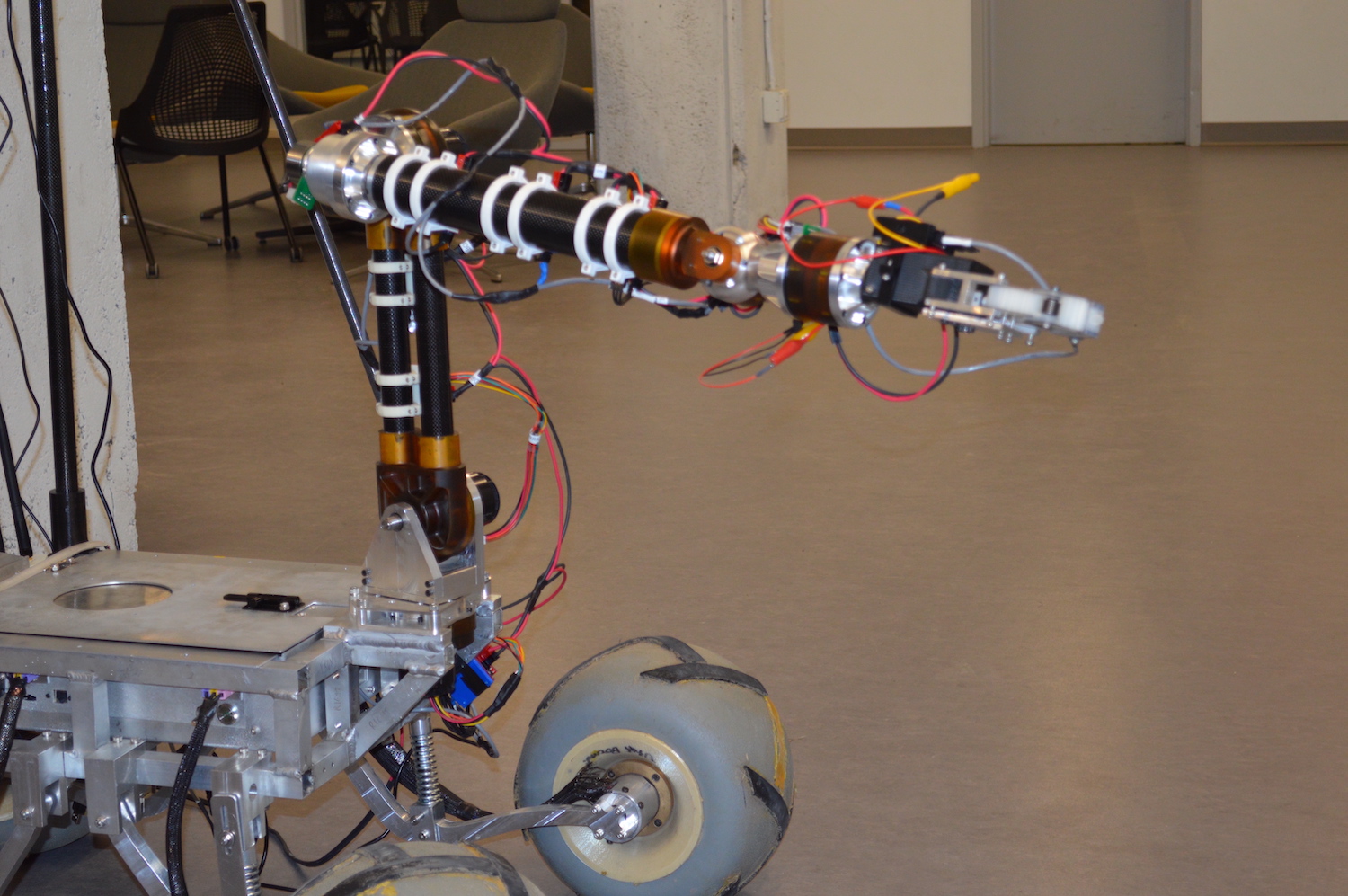
The Arm Subteam builds the rover's 6 axis robotic manipulator, which is the rover's primary means of interacting with its environment. All six joints are powered by high-power brushless DC motors paired with harmonic gearboxes designed to minimize backlash. The arm can be controlled using inverse kinematics or through a small-scale model of the arm that an operator can move directly, with the rover arm replicating its motions.
This year, the Arm Subteam is focusing on improving reliability, sensing, and versatility. We are transitioning to a new actuator stack and developing absolute joint encoders to improve positional awareness and control. We are developing a better camera system and using sensors to make the arm more easily controlled on the field. Alongside these improvements, we are redesigning the end effector to handle a wider variety of tasks and exploring autonomous typing with the arm.

Astrotech
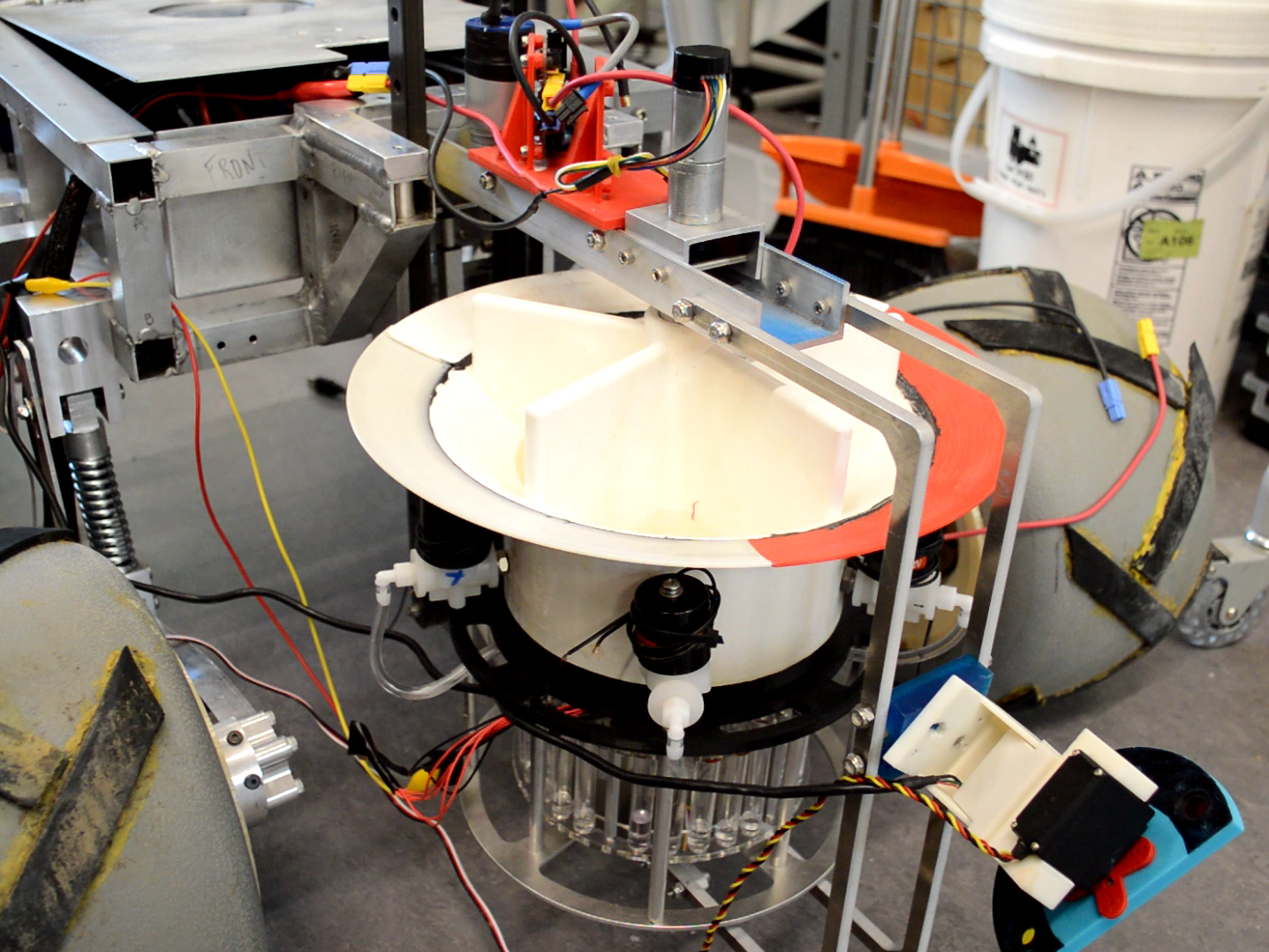
The AstroTech Subteam is responsible for designing and building the systems used to collect and analyze soil samples for signs of life. The team is split into Science and Mechanical, with both groups working together to develop our sample analysis system. The Science team develops chemical tests to identify and characterize compounds in collected soil samples, while the Mechanical team designs the hardware needed to collect and analyze those samples. This includes an auger that drills into the ground, collects soil, and delivers it to the analysis system, as well as a pumping system that moves the sample through the system and mixes it with chemicals for testing.
Currently, the AstroTech Subteam is working on designing Raman and fluorescence spectroscopy systems to improve the reliability of soil sample analysis. We are also integrating a microscope into the analysis system to study collected soil samples in greater detail along with developing a sample wheel to run all chemical tests. aspect of AstroTech.

Drives
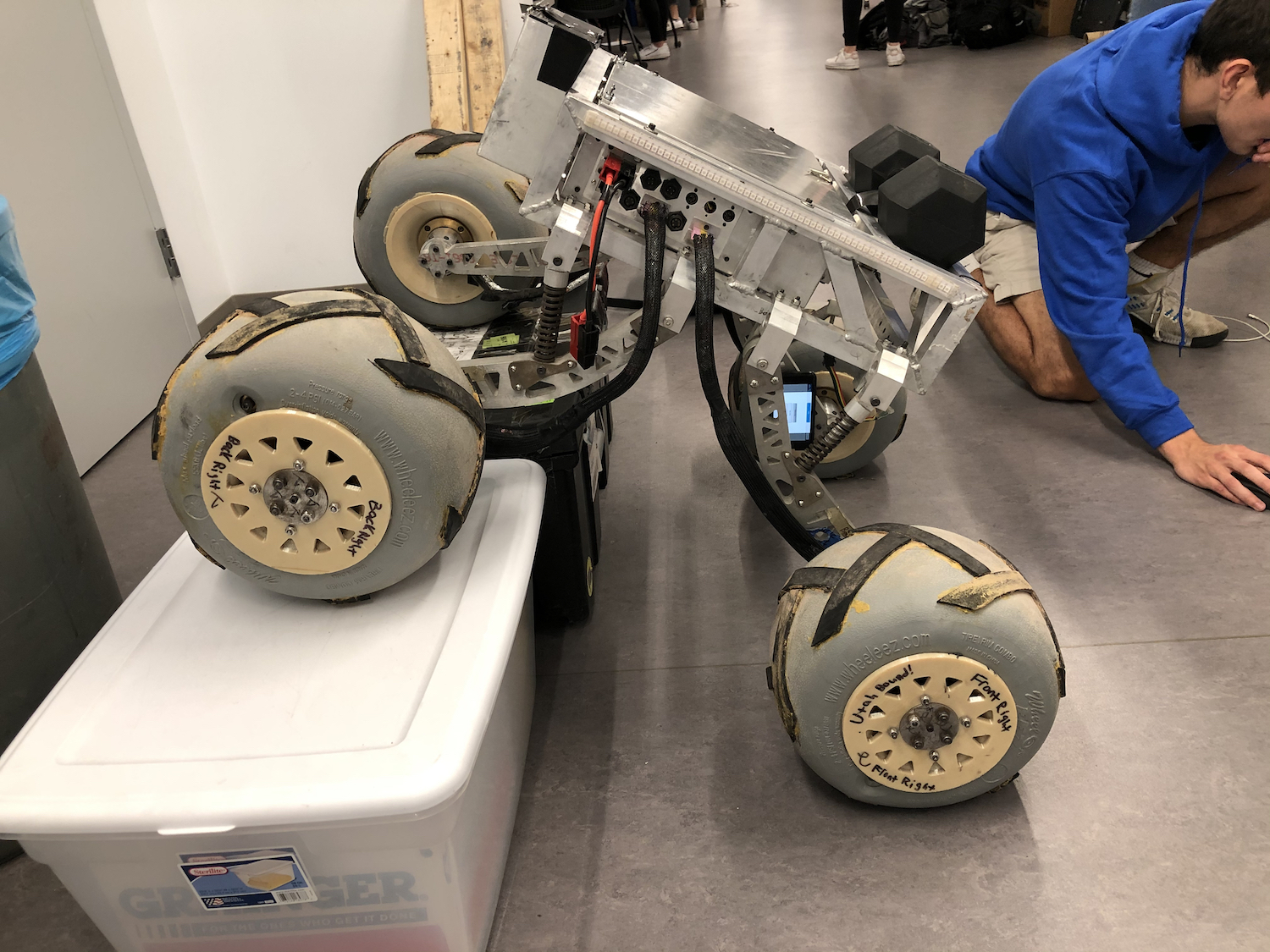
The Drives Subteam is responsible for designing and manufacturing the wheels, suspension, and frame that allow the rover to traverse rough competition terrain, as well as developing a drone for scouting the terrain ahead of the rover. Our competition requires the rover to navigate rocks, drops, and steep slopes up to 45 degrees, so our drive systems are designed to be robust to handle these conditions. We develop an actuator stack with a planetary gearbox to drive our wheels, as well as an actuator stack with harmonic gearboxes for our swerve drive system. We also design and 3D print flexible TPU wheels and a 4-wheel double wishbone independent suspension to handle the rough terrain. In addition, we build a hinged camera mast to mount cameras and the radio system and the electrical core to house and organize the rover's electronic components.
This year, we are manufacturing our components in-house while continuing to improve our existing systems. We are developing absolute encoders to accurately zero our wheels, designing new swerve actuators, and updating our radio systems in parallel with developing a radio repeater to improve communication across the competition terrain.

Electrical
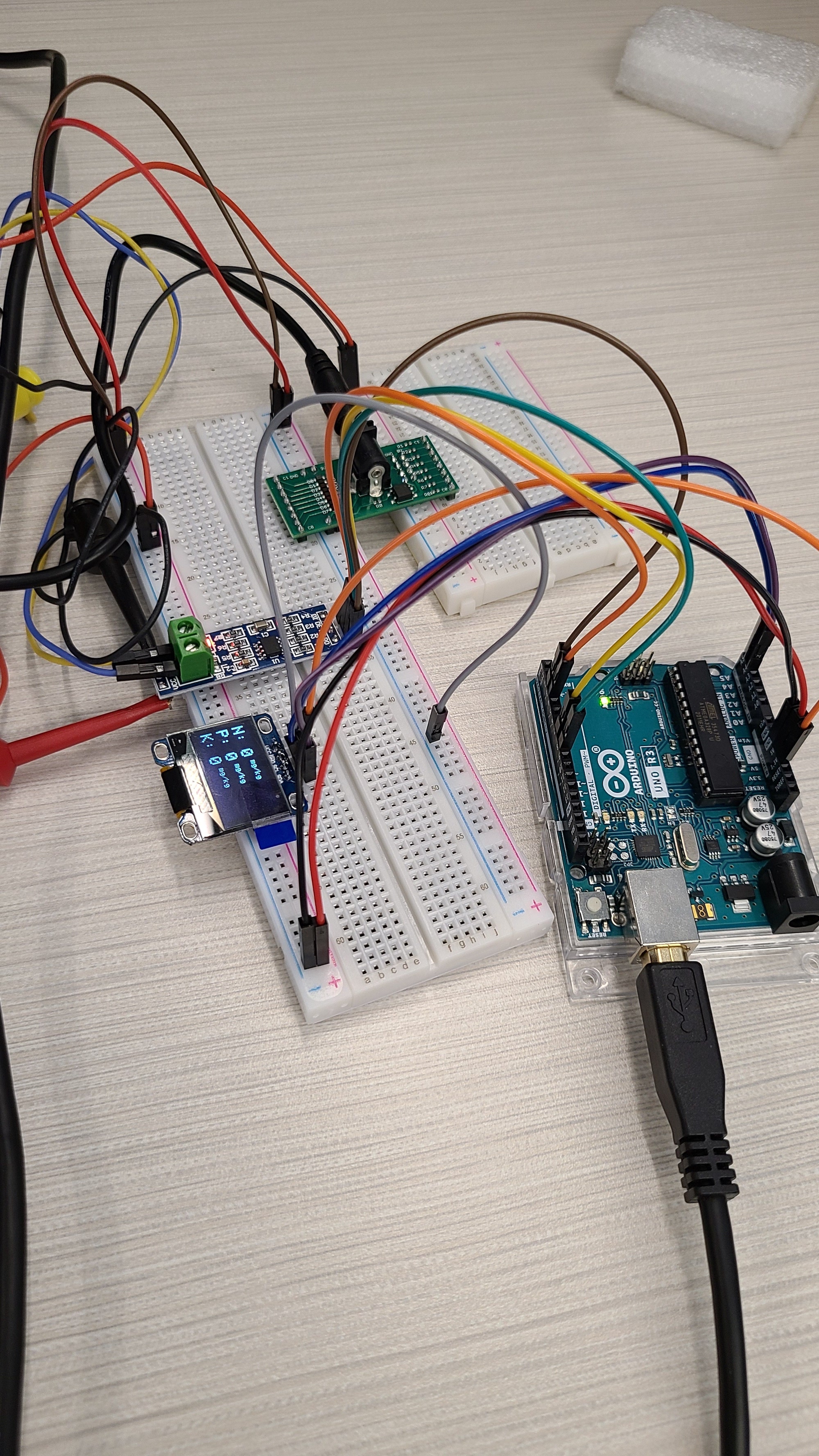
The Electrical Subteam develops the hardware responsible for running all systems on the rover. Our primary goal is to design flexible and robust hardware that can be adapted to changing mechanical designs while still supporting the software subteam's requirements. Our system handles low level control of motors and sensors, power distribution across electrical components, and radio system development.
This year, we are improving our custom brushed and servo motor controllers to support the drives and arm subteams, and have also made upgrades our power distribution and battery management systems.

Software
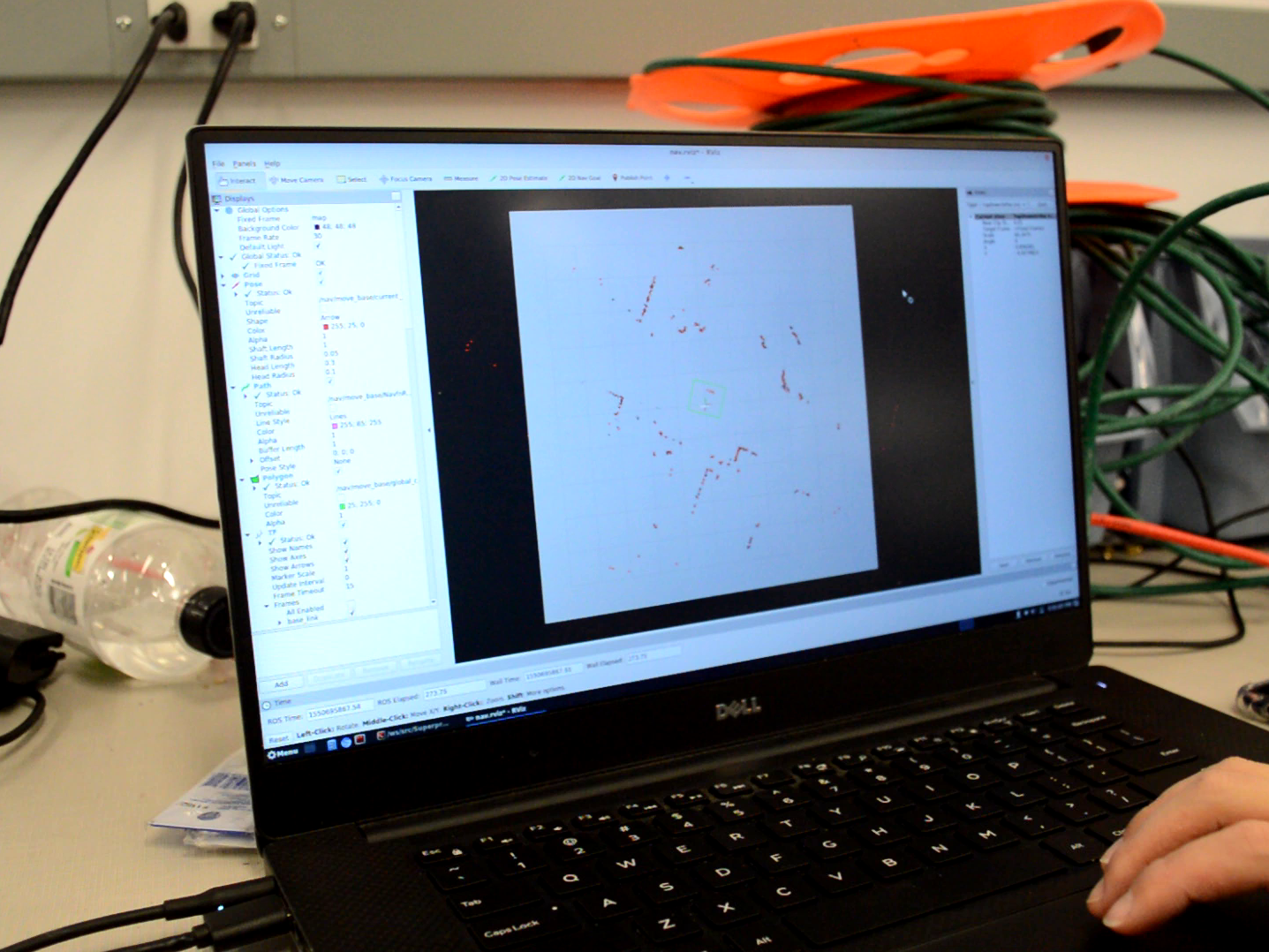
The Software Subteam handles rover controls, path planning, user interfaces, and computer vision. Our projects this year include better controlling and maintaining the rover through graphical user interfaces, augmenting autonomous path planning using LIDAR and an enhanced computer vision system to guide our algorithms and streamlining the overall autonomy pipeline.
Our focus for URC 2027 is to upgrade the foundation of our entire software in order to support our work for the next several years. This gives us the opportunity to look at all of our software systems and make important design decisions to improve the performance and capabilities of the rover in all areas.

Business & Design
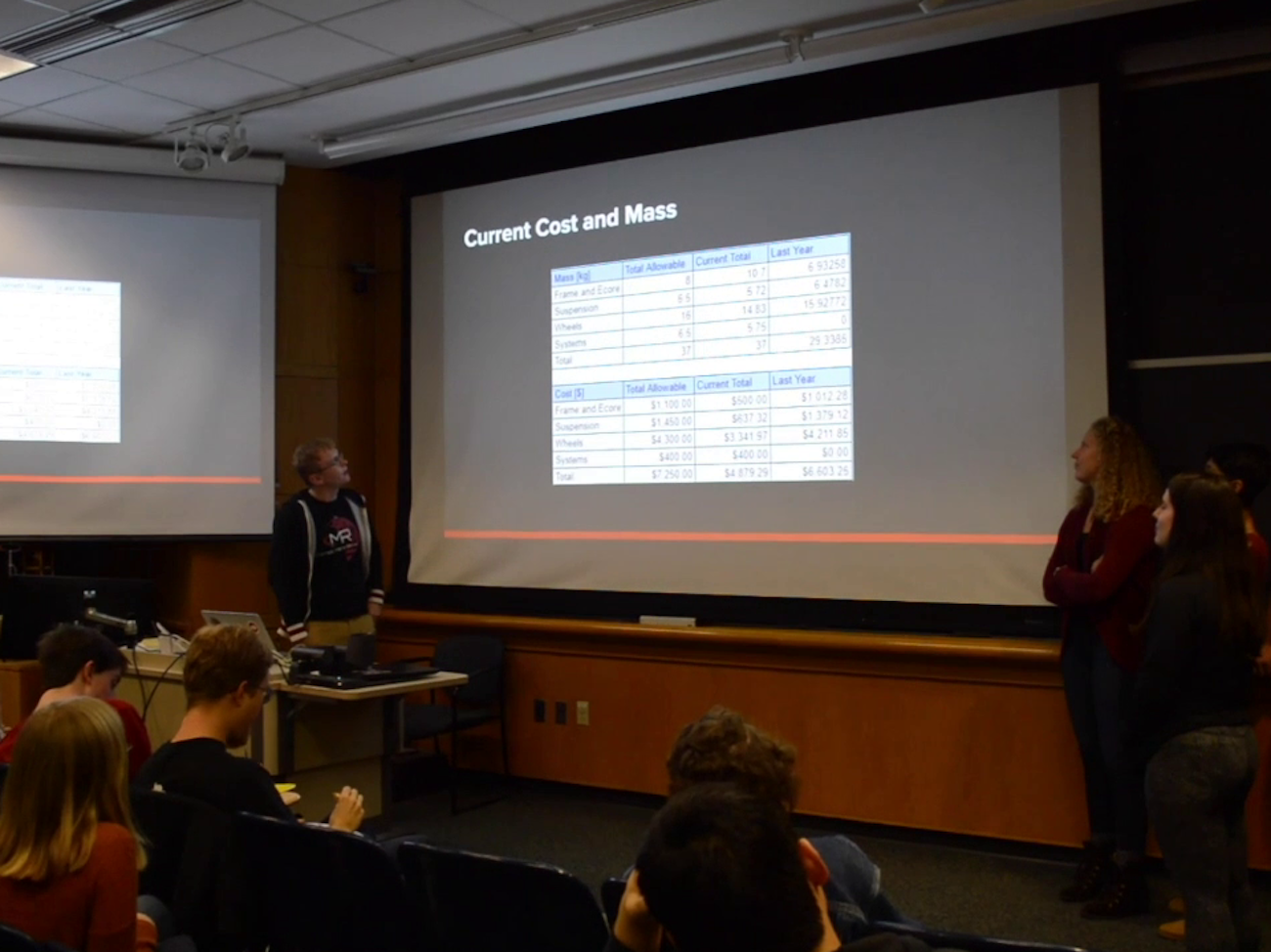
The Business Subteam is responsible for all other aspects that are needed to build a successful rover. This includes team finances, web design, graphic design, social media, video editing, and both public and sponsor outreach.
This year, we are working on increasing our social media presence and working with industry mentors to provide valuable feedback on subteam designs.